Architecting Governance and Self-Service at Docker
Led Docker's design system evolution by establishing the governance model, contribution playbook, and product ceremonies that enabled teams to self-serve and scale system adoption across the organization.
The Problem
When I joined Docker's design system team, there was no governance model, contribution process, product ceremonies or rituals, communication strategy, or self-service infrastructure. The design system was a collection of components without the organizational architecture needed to scale, evolve, or gain trust across teams.
Without governance and process, designers and engineers couldn't contribute without bottlenecking. Without ceremonies and communication, there was no visibility into what the design system team was doing, what was on the roadmap, or how adoption was happening. The system couldn't function as a product—it was reactive, not strategic.
The challenge wasn't technical—it was organizational. Docker is dev-heavy, and any governance model had to feel lightweight enough to not slow teams down while being robust enough to maintain quality. As the Staff Designer leading this transformation for the past 6 months, I was responsible for establishing the roadmap, governance, ceremonies, and communication that would make contribution and adoption visible and sustainable.
"Before Chad established the roadmap and governance model, I didn't know how to contribute in a meaningful way or what the design system team was even doing. Understanding how and when adoption happens is key to the process, and we didn't have that before."
My Approach
I treated the design system as a product with users who needed clear ways to discover, contribute, and adopt patterns. My strategy had four pillars: establish what exists through rigorous audit, define how we work through patterns and workflows, enable contribution through playbooks and workshops, and scale governance so there's no single point of failure.
Discovery & Audit
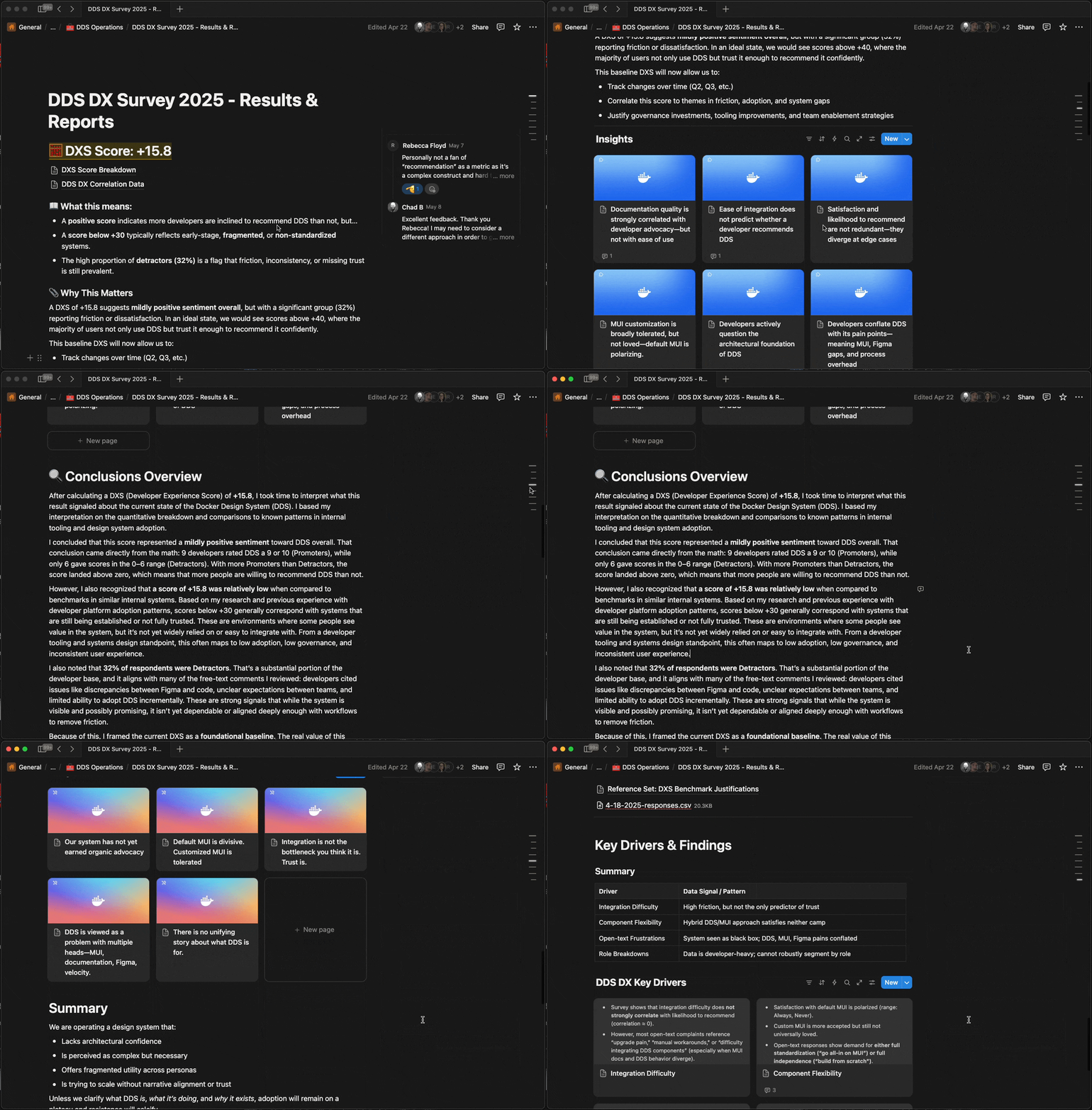
Partnered with UXR to run surveys and live sessions across all 19 designers at Docker. Coached async collection of patterns and components across the organization through a massive spreadsheet that became our asset inventory and source of truth.
Patterns & Strategy
Wrote a glossary and strategy document, then built Docker's first pattern library—instructions for using components in concert to facilitate workflows at the JTBD level. Shipped guides on how to use patterns, establishing a new way of thinking about the system beyond individual components.
Contribution Playbook
Led a workshop in Barcelona during our offsite where I broke designers into groups with fun scenario-based exercises. Teams generated sticky notes, drew contribution process maps, and presented their ideal workflows. We voted on the best ideas and created a Frankenstein version with no red tape and plenty of guidance—resulting in the contribution playbook and Notion templates that empower designers to contribute independently.
Governance & Scale
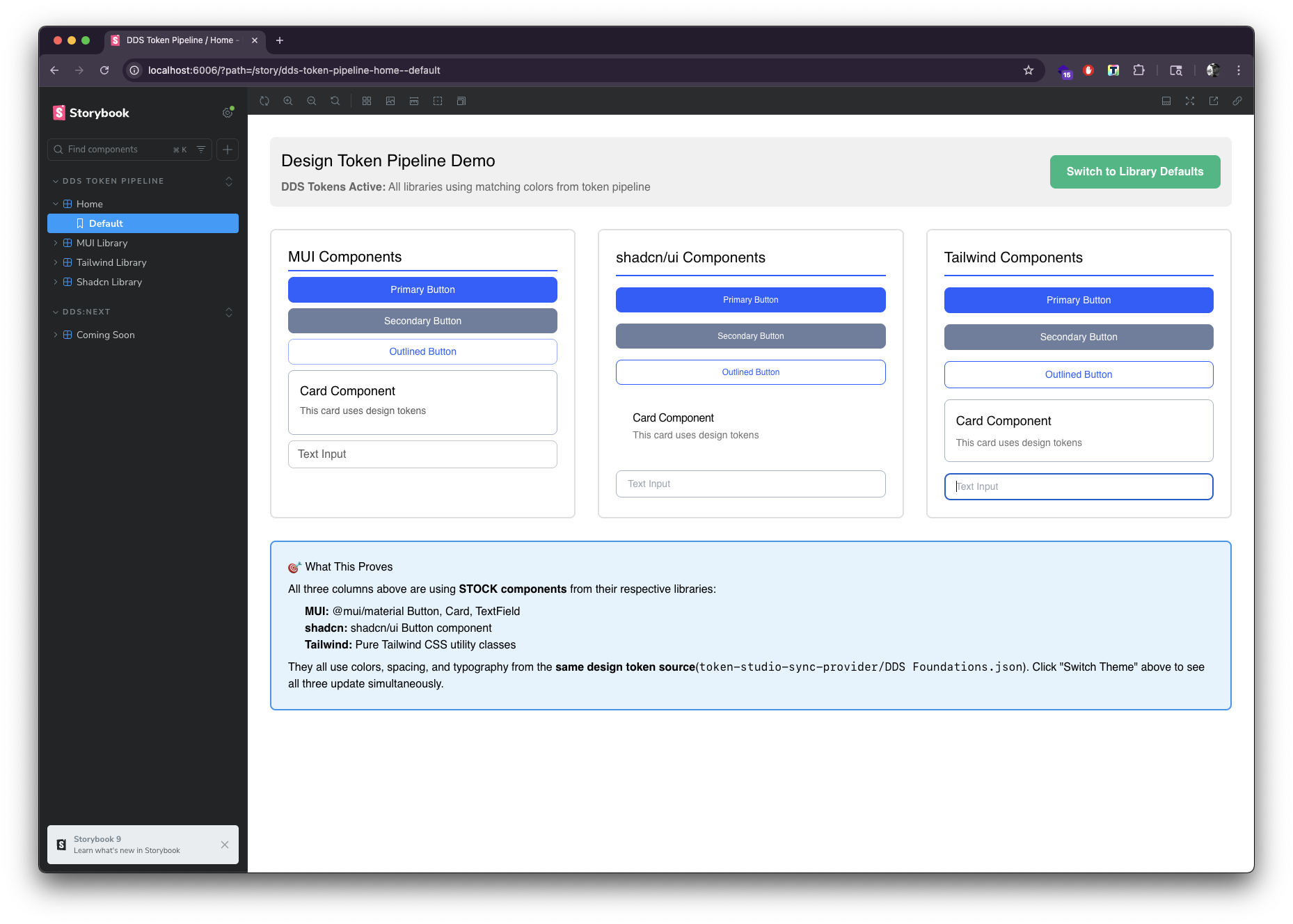
Adapted Brad Frost's governance framework from the community Figma file to Docker's dev-heavy process. Facilitated feedback rounds to refine it, then established rituals and ceremonies to coach teams through using these tools successfully—removing myself as a single point of failure through documentation, automation, and the Token Pipeline proof of concept.
The Work
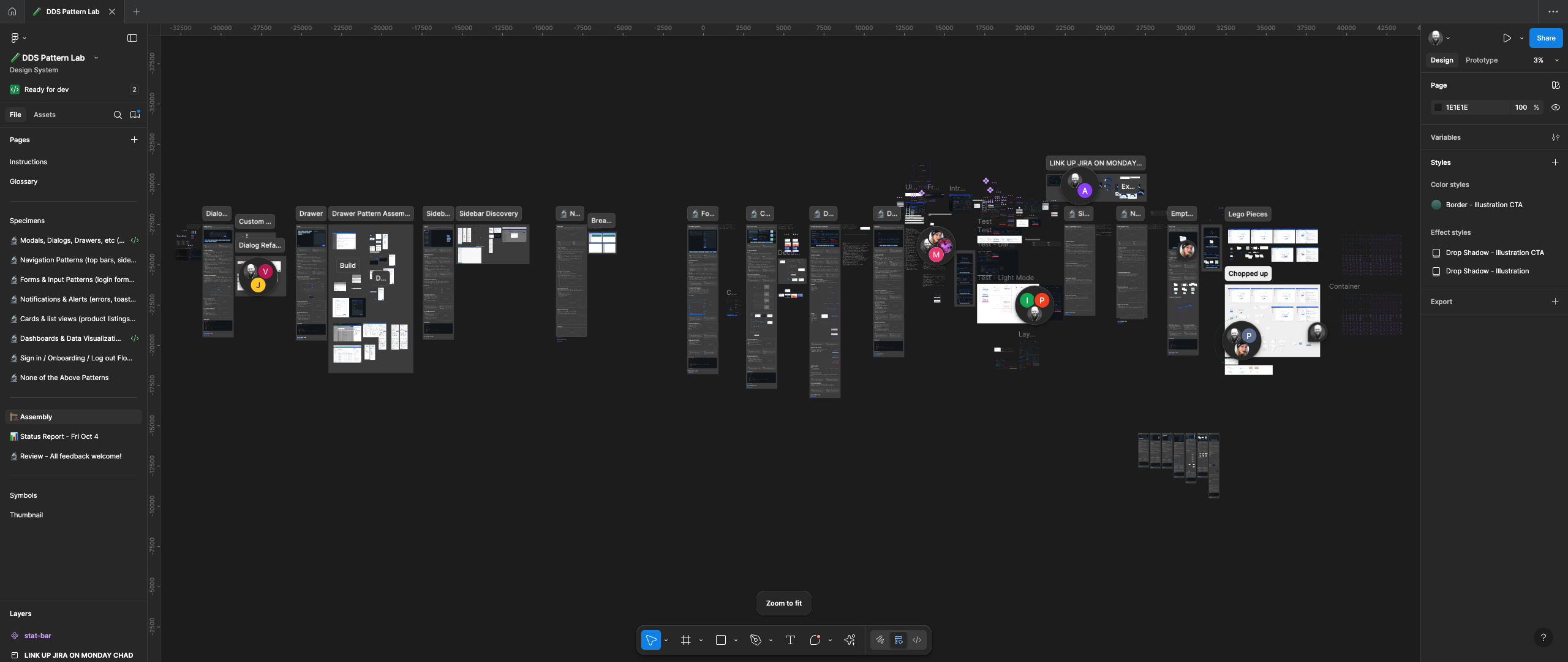
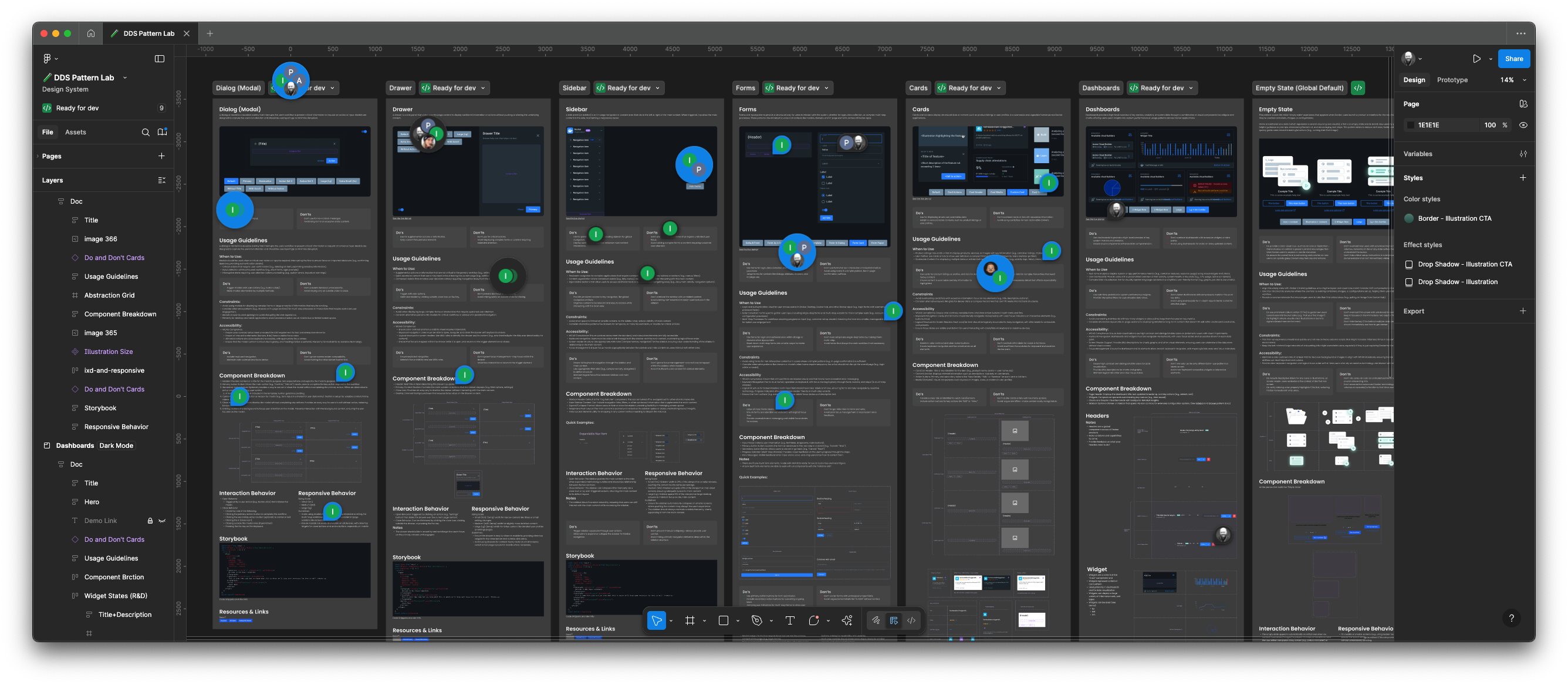
Before: Chaotic pattern collection with no structure or visibility into what existed across teams.
After: Pattern Lab Overview showing complete patterns with clear structure, ownership, and contribution paths for all 19 designers.
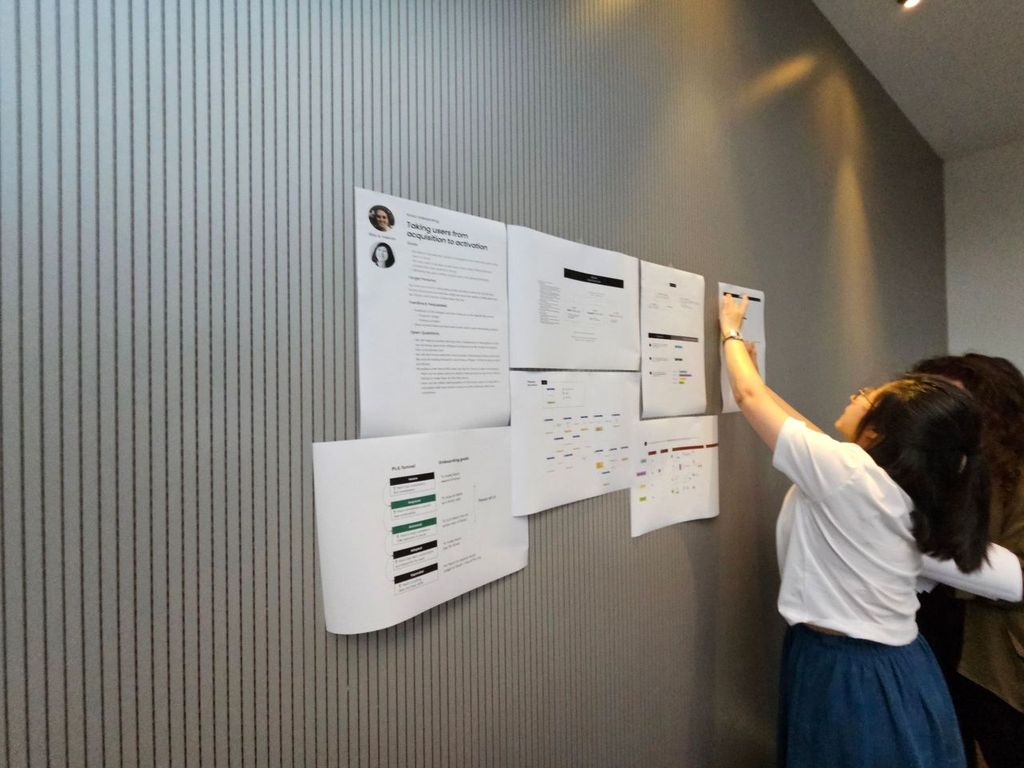
Barcelona workshop: Breaking designers into groups for contribution process exercises
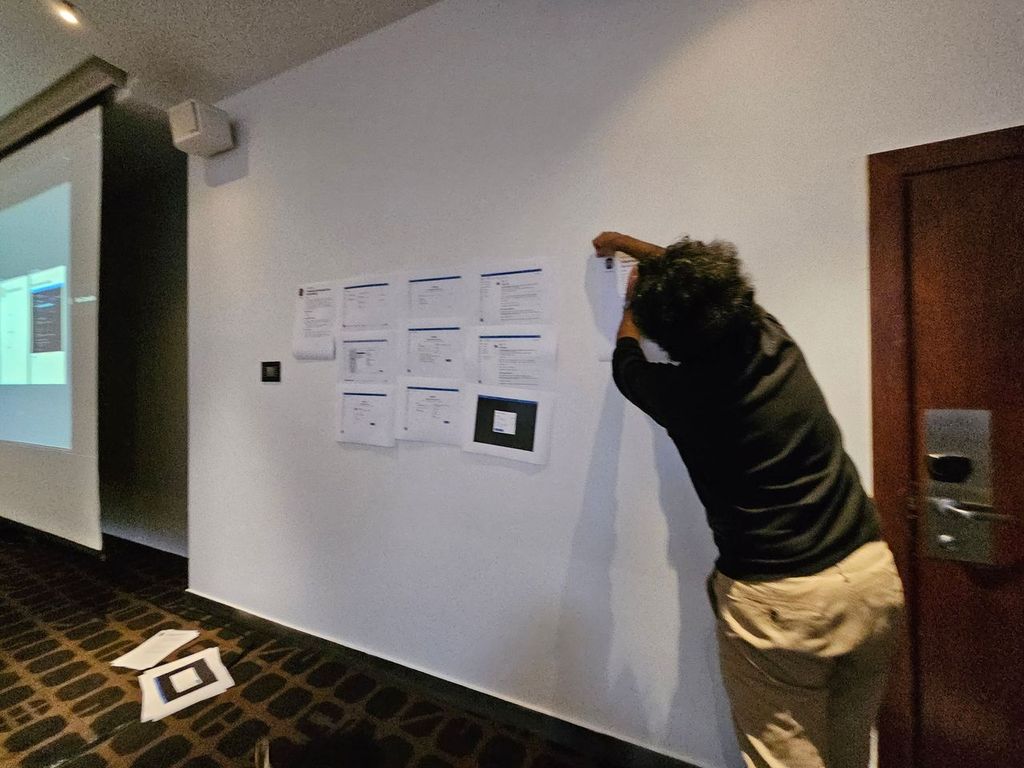
Teams generating sticky notes and mapping ideal contribution workflows
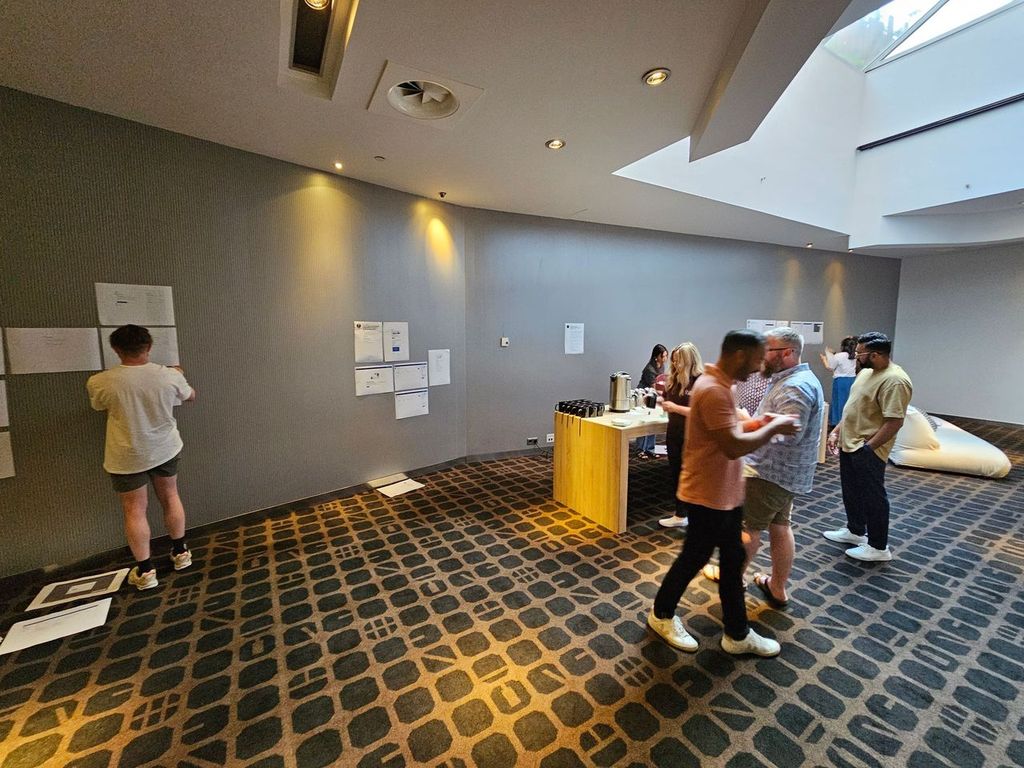
Presenting findings and voting on the best contribution process ideas
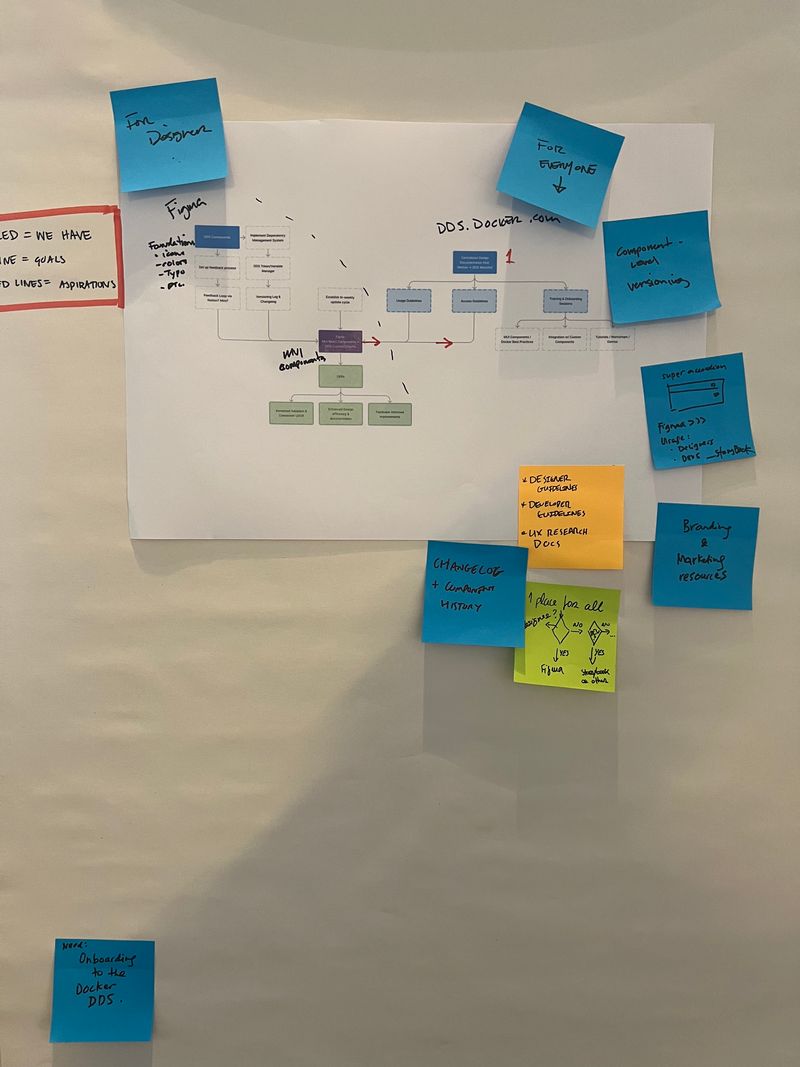
Team artifacts from workshop exercises showing contribution process maps
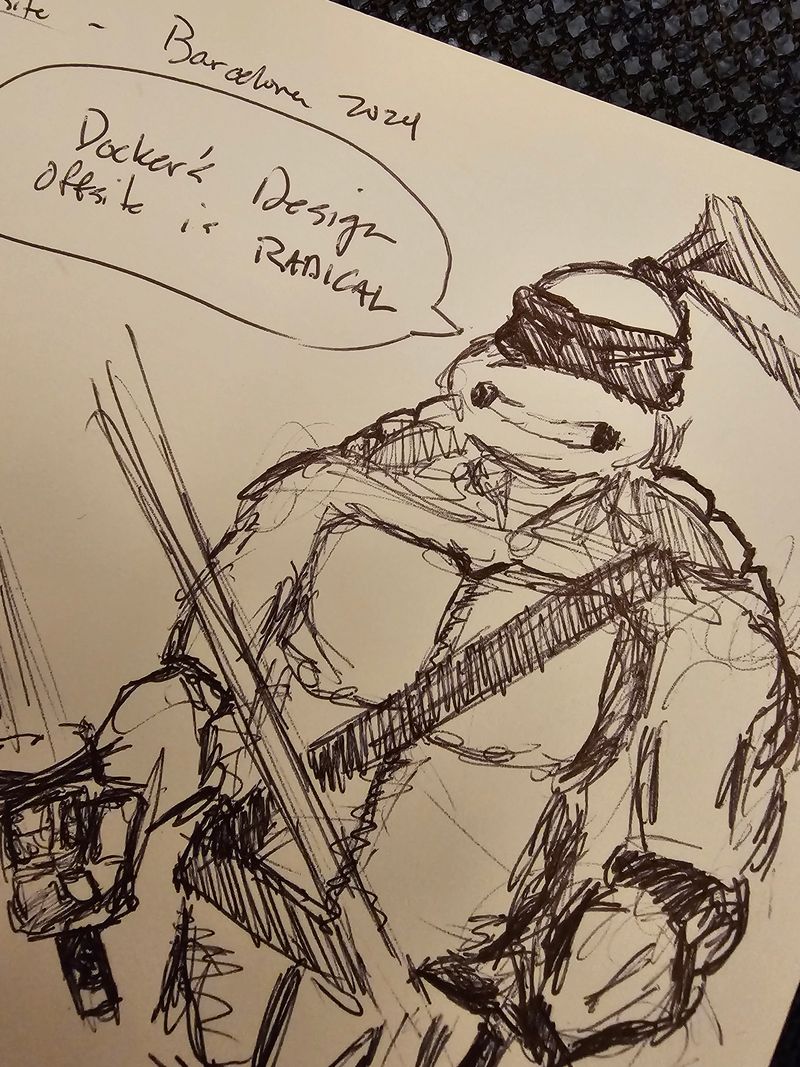
Workshop sketches capturing contribution mental models
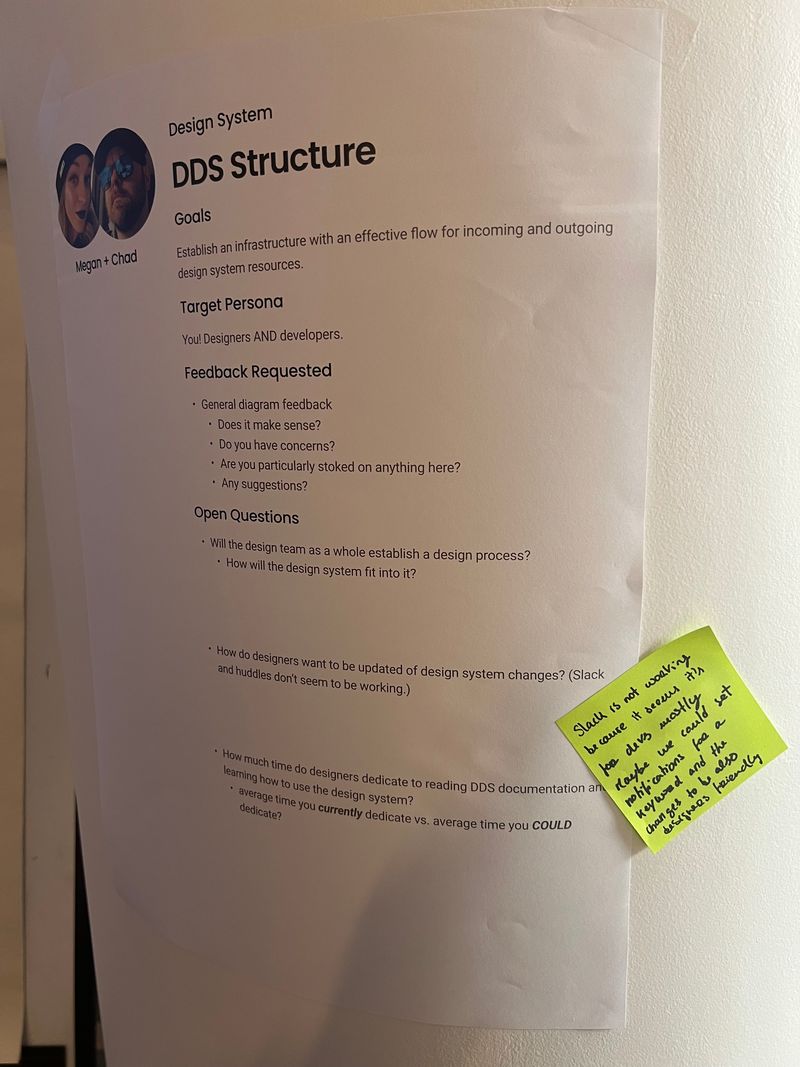
Design System workshop station during Barcelona offsite

Dashboard Pattern
Complete pattern showing how to combine components for dashboard workflows at JTBD level
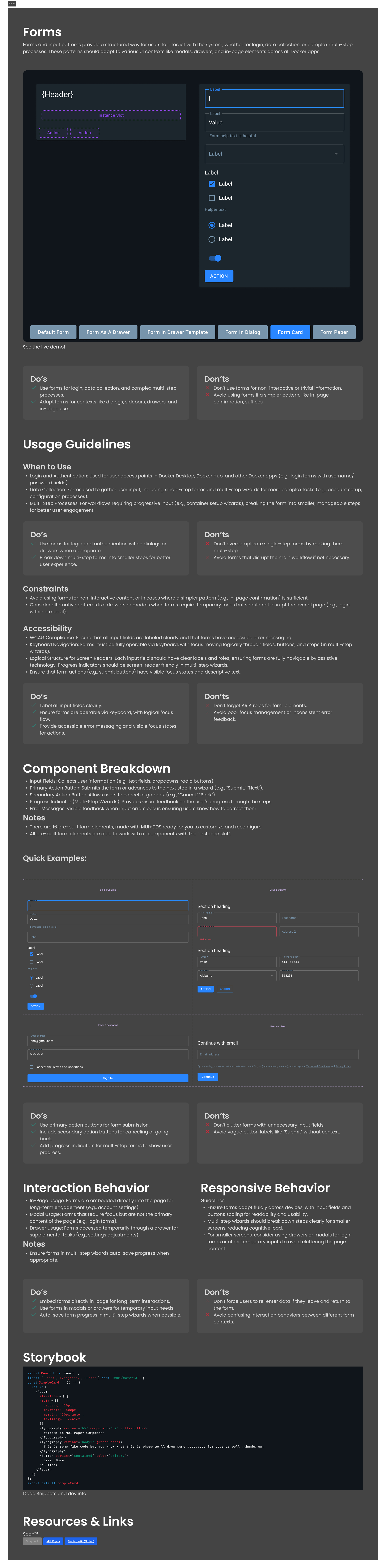
Forms Pattern
Pattern library guide for building form workflows with validation and error states
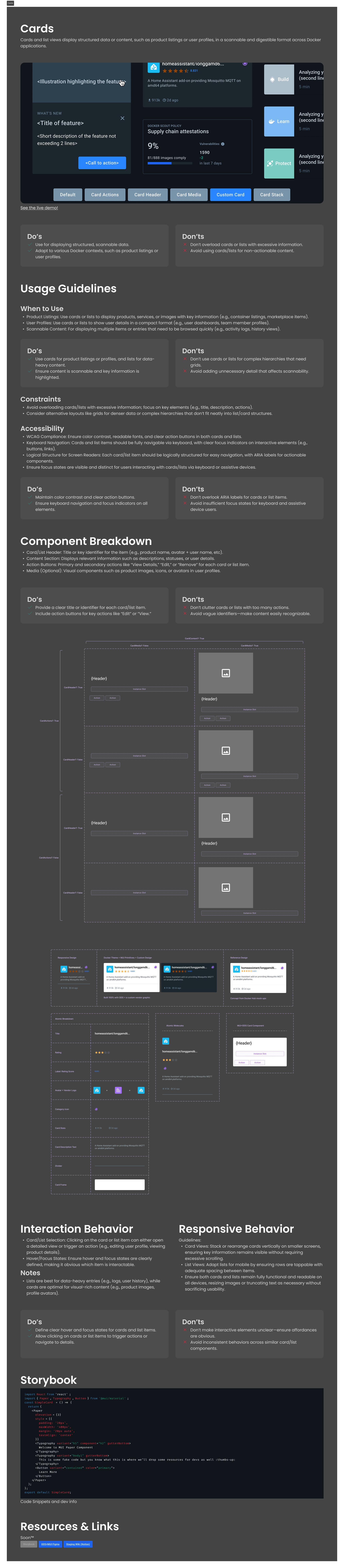
Cards Pattern
Flexible card pattern for listings, dashboards, and content displays
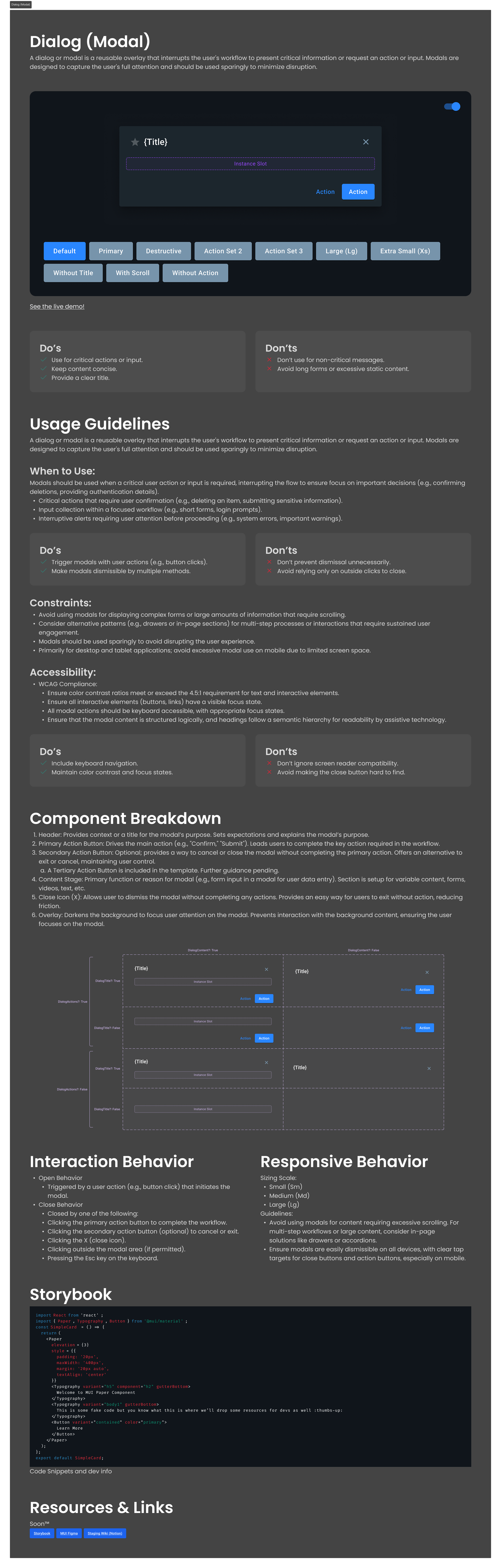
Dialog/Modal Pattern
Accessible modal pattern with focus management and interaction guidelines
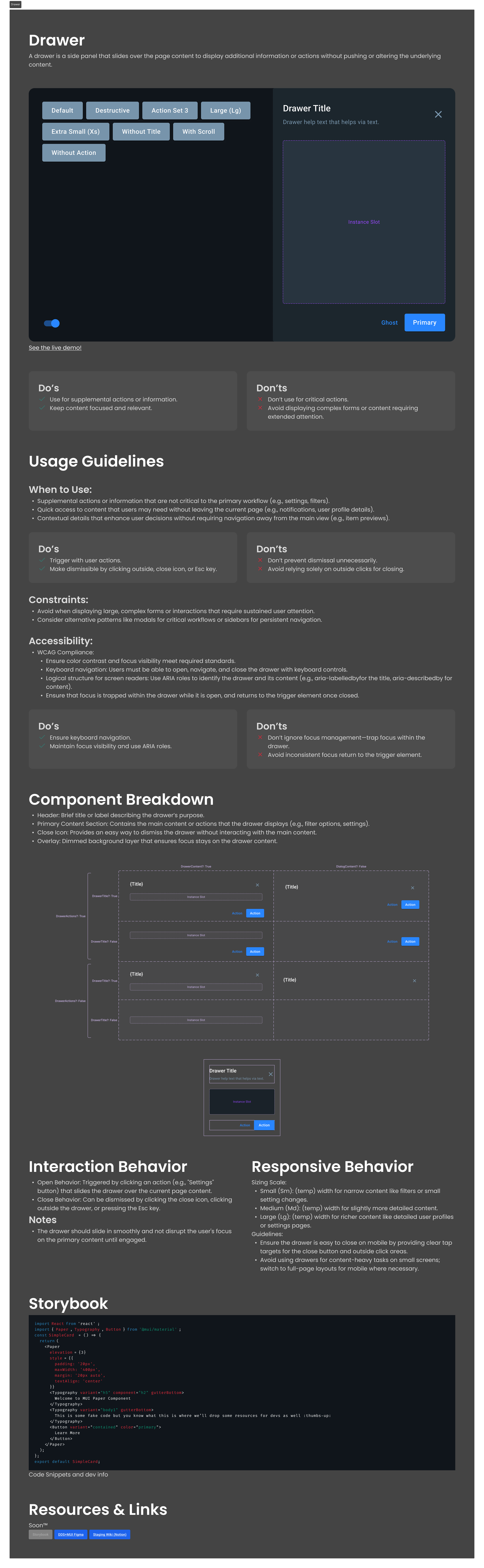
Drawer Pattern
Drawer pattern for side navigation and contextual actions
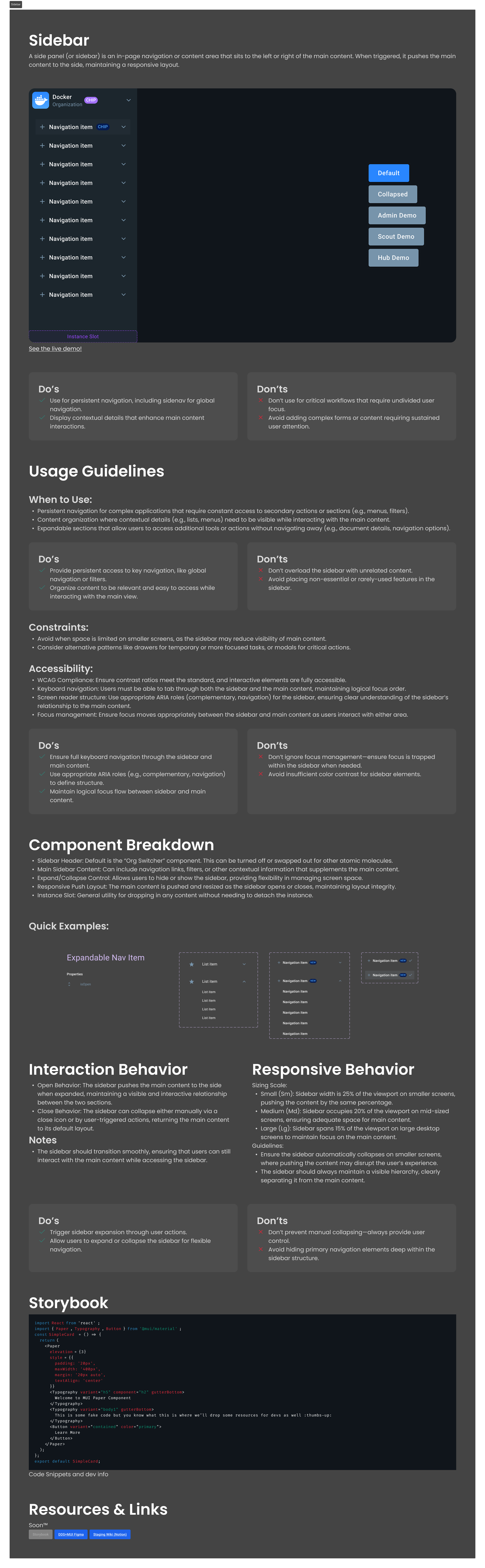
Sidebar Pattern
Sidebar navigation pattern with responsive behavior and accessibility
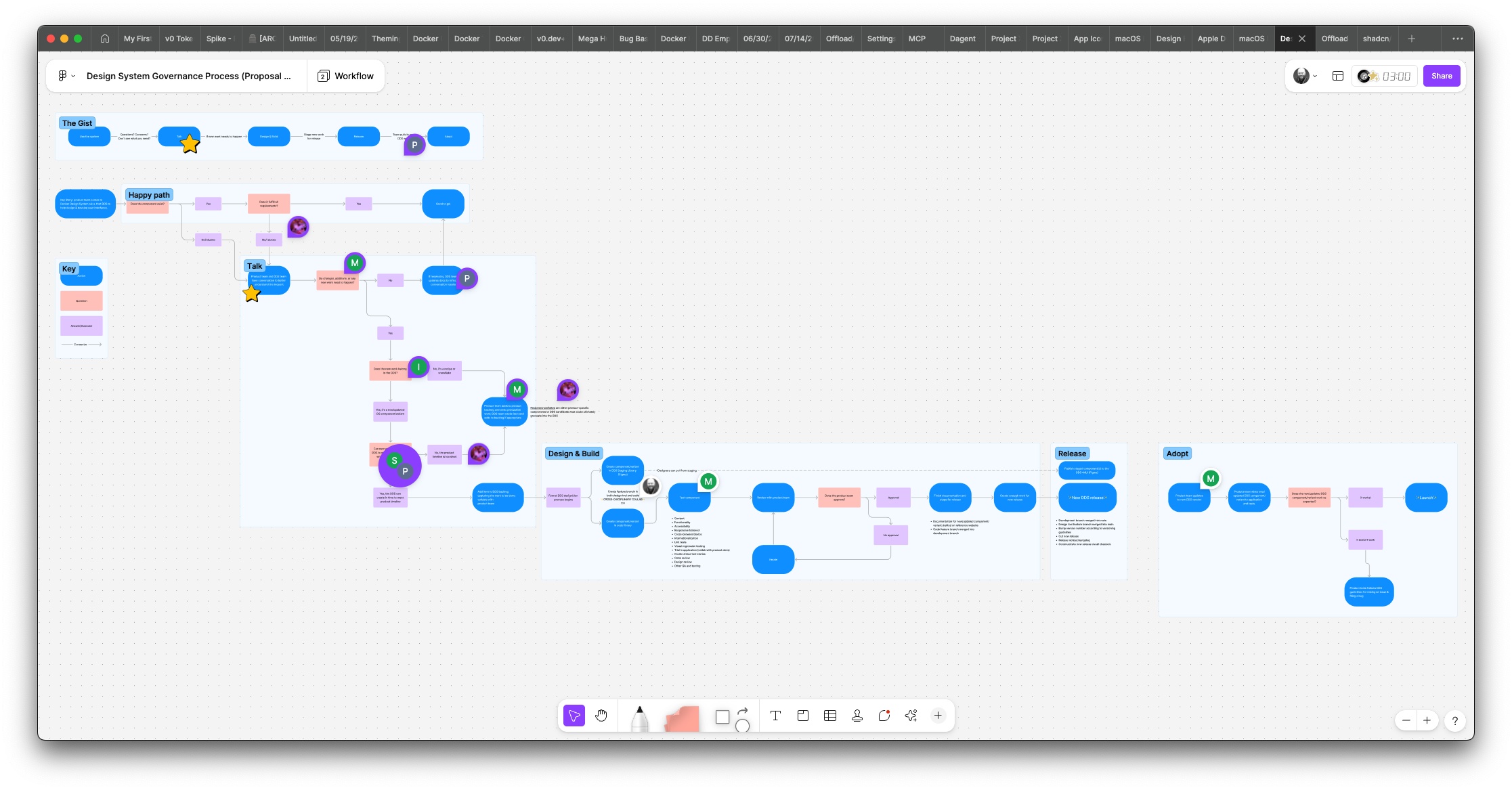
Brad Frost governance framework adapted for Docker's dev-heavy process
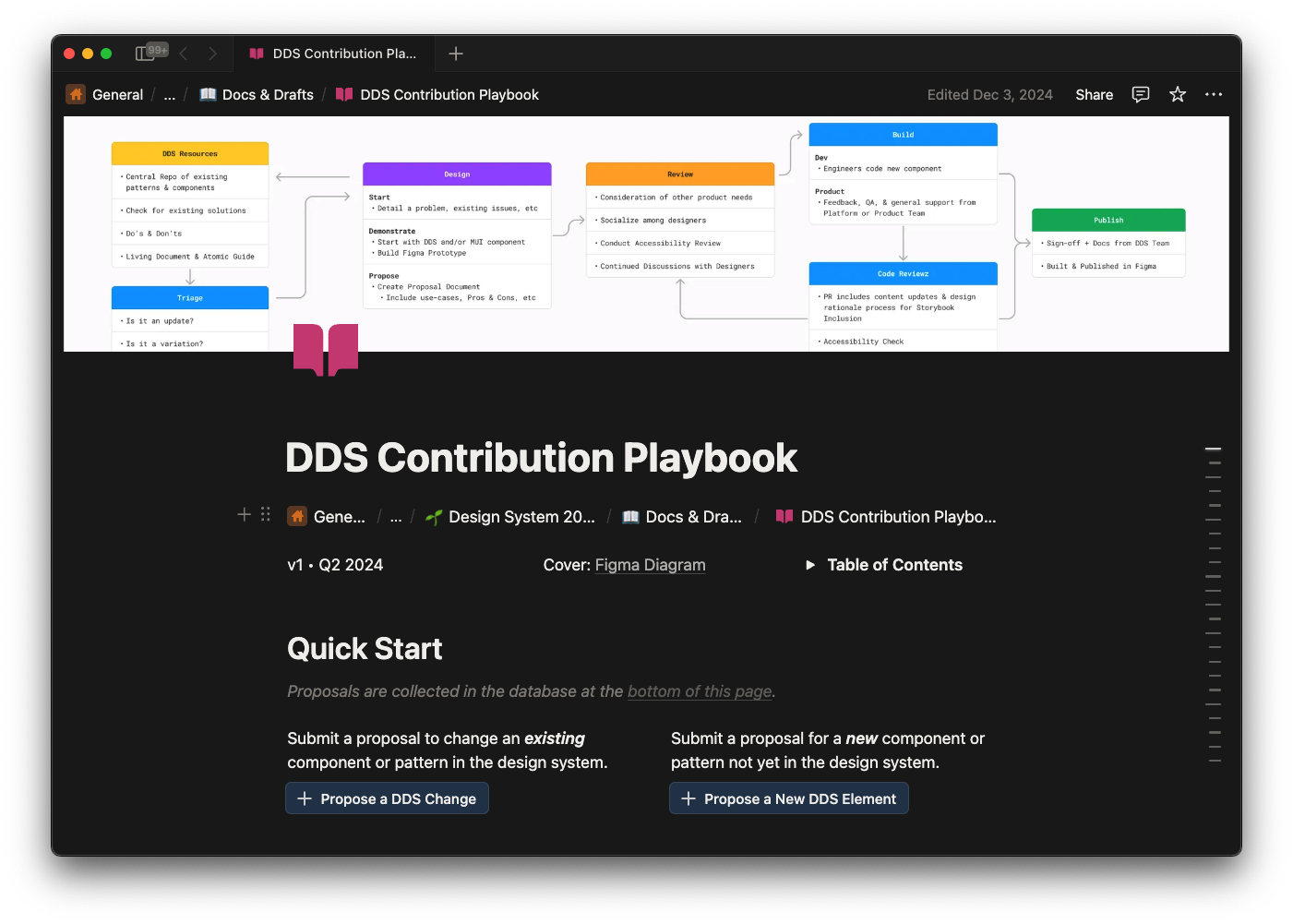
Contribution playbook in Notion with templates for self-service contributions
The Impact
Took Brad Frost's community framework and tailored it to Docker's dev-heavy culture. Teams now have clear contribution paths, decision-making rituals, and quality gates that feel like guardrails, not gatekeeping. Design system governance went from non-existent to running itself.
Created Docker's first pattern library—not just components, but instructions for how to combine them at the job-to-be-done level. Teams now have repeatable workflows for dashboards, forms, modals, and more. Patterns became the new way designers and engineers talk about building products.
Led a workshop in Barcelona where designers mapped ideal contribution processes through exercises, sticky notes, and presentations. We voted on the best ideas and shipped a playbook that removed red tape and gave everyone a clear path to contribute. The playbook is now the standard for how teams engage with the design system.
Designers went from waiting on a small team to contributing independently through clear playbooks, templates, and governance. No more bottlenecks. No more waiting. Teams ship patterns and components on their own timeline, and the design system scales without me being in every decision.
Built documentation, playbooks, and the Token Pipeline proof of concept so the design system doesn't rely on one person. Teams have self-service tools, clear processes, and automation that keeps quality high without slowing down velocity. The system runs itself.
Key Outcomes & Learnings
Governance only works when it's invisible
The best process doesn't feel like process—it feels like the path of least resistance. Docker's governance model works because it guides teams without getting in their way. Lightweight ceremonies, clear templates, and automated checks make quality scalable without becoming bureaucratic. If teams have to think about governance, you've already lost.
Co-creation builds adoption faster than documentation
The Barcelona workshop didn't just produce a playbook—it gave designers ownership of the contribution process. When people help build the system, they actually use it. Participation creates buy-in that no amount of docs can match. The playbook works because the team made it, not because I handed it to them.
Scale means making yourself optional
The Token Pipeline, playbooks, and governance framework exist so I'm not a single point of failure. Staff-level work isn't about being the hero—it's about building systems that run without you. If the design system can't function when I'm on vacation, I haven't done my job. Autonomy is the goal, not control.
"The governance process with the map tailored to Docker's release bias and opinionated workflow unlocked the whole organization to participate in building the design system—not just consuming it. The developers on both my teams are completely empowered to get to work and build in meaningful ways without ever having to wait on bottlenecks from the design system team due to time or competing priorities. Async, org-wide build and adoption phases are what we needed, and Chad made it happen."
"I spent two years building components and design tokens that worked. Chad came in and established the governance, patterns, and contribution model that turned my work into infrastructure the entire org could build on—at scale, without bottlenecks. He made collaboration the default, not the exception."
The Adoption Journey
Discovery & Audit
Patterns & Strategy
Contribution Playbook
Governance & Scale
Continue Exploring
More Case Studies